



Replacing the ADS1294R with the GXSC ADC in ECG Machines
Time:2026-05-08
Views:401
ECG machines serve as the first line of defense in cardiac health monitoring. Their function is to capture the faint electrical signals generated by the heart’s electrical activity. After analog-to-digital conversion and signal processing, these signals are converted into visual ECG waveforms, providing reliable data for physicians to diagnose cardiac conditions such as arrhythmias and myocardial ischemia. ECG signals are characterized by low amplitude (typically 0.5 mV to 5 mV), a narrow frequency range (0.05 Hz to 150 Hz), and susceptibility to interference. At the same time, ECG machines must meet medical-grade reliability, high safety standards, and multi-lead acquisition requirements.
The workflow of an ECG machine involves ECG signal acquisition, signal conditioning, analog-to-digital conversion, data processing, and waveform display/storage. Among these steps, the precise acquisition of ECG signals forms the foundation of the entire system and directly impacts the accuracy of the physician’s diagnosis. GXSC’s low-power, highly integrated medical-grade analog front-end chips are specifically designed for the acquisition of physiological electrical signals such as ECG and EEG. They integrate a 4-channel, synchronous-sampling 24-bit Σ-Δ ADC and incorporate all core functions required for ECG acquisition. Their characteristics align closely with the core requirements of ECG machines, enabling high-performance ECG acquisition without the need for complex peripheral circuits.
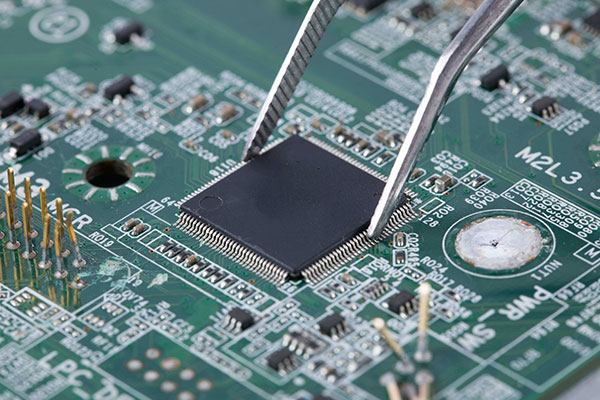
The GXSC ADC operates at output rates ranging from 250 SPS to 64 kSPS. At an output rate of 250 SPS, it achieves an IRN performance of 1.28 μVpp (0.23 μVrms); at 64 kSPS, it offers a -3 dB bandwidth of 14.4 kHz. It features pull-up/pull-down resistors, a current sink/source, and AC lead detection. Additionally, the chip supports daisy-chain configuration to address data cascading issues in high-channel-count systems. A digital buffer with up to 16-depth capacity minimizes data read frequency, thereby reducing system power consumption.
Key Features of the GXSC ADC:
Input Reference Noise: 1.28 yVpp (0.23 μVrms); (BW=70 Hz, G=24)
Data Rate: 250 SPS to 64 kSPS
Common-Mode Rejection Ratio (CMRR): -118 dB
Programmable gain: 1, 2, 3, 4, 6, 8, 12, 24
Single-supply operation; analog supply: 2.75 V to 5.25 V; digital supply: 1.8 V to 3.6 V
Internal or external reference; internal or external clock; internal clock output available
Built-in bias amplifier, lead disconnection detection, and temperature sensor
Test signal and power supply measurement functions
Supports up to 16-bit digital buffer
Flexible power-down and standby modes
SPI interface, supports daisy-chaining
Excellent ESD protection: HBM: +8000V; CDM: ±1500V; Latch-Up: 600mA
Operating temperature range: -40°C to +85°C
Summary: The GXSC ADC package type is compatible with the ADS1294R, and its SPI communication protocol is essentially identical to that of the ADS1294R. This allows for direct replacement in existing designs without the need to adjust peripheral circuits, significantly shortening the development cycle.

 mail
mail